FROM FRESH PASTE TO YOUR FINAL STAIN
A little orange today.
A deeper story tomorrow.
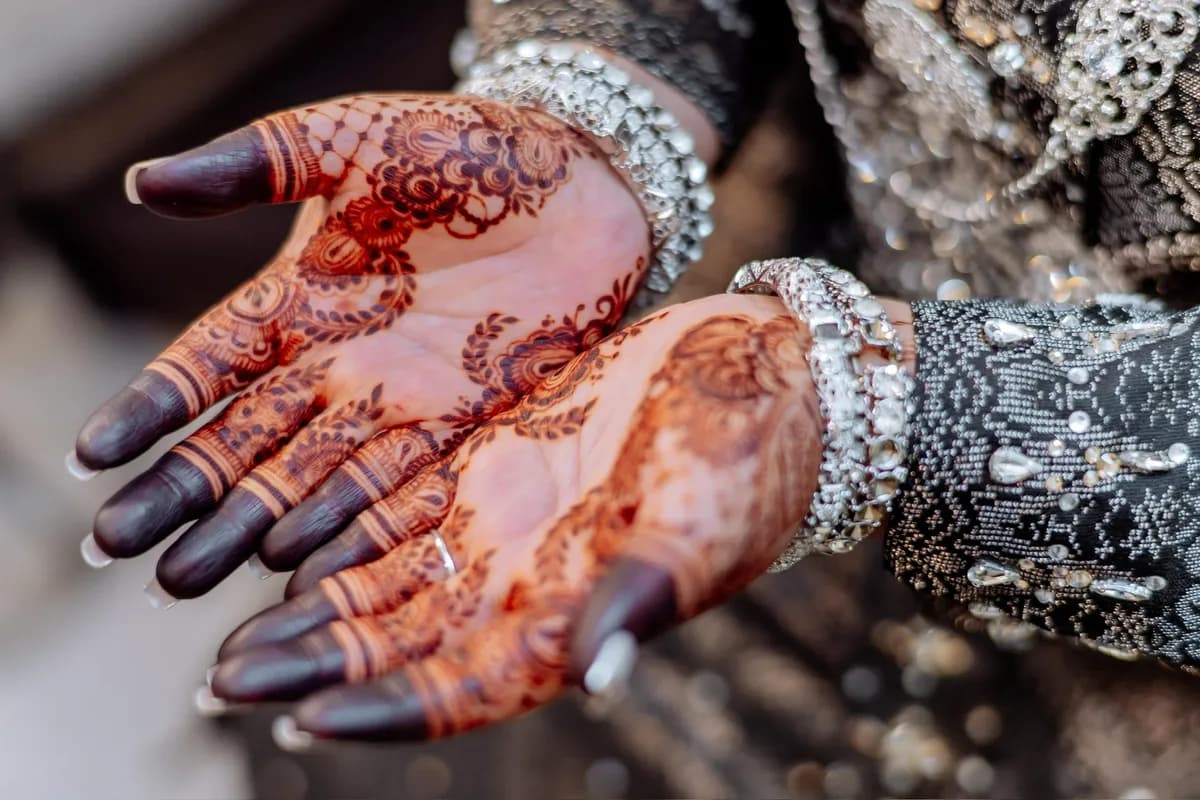
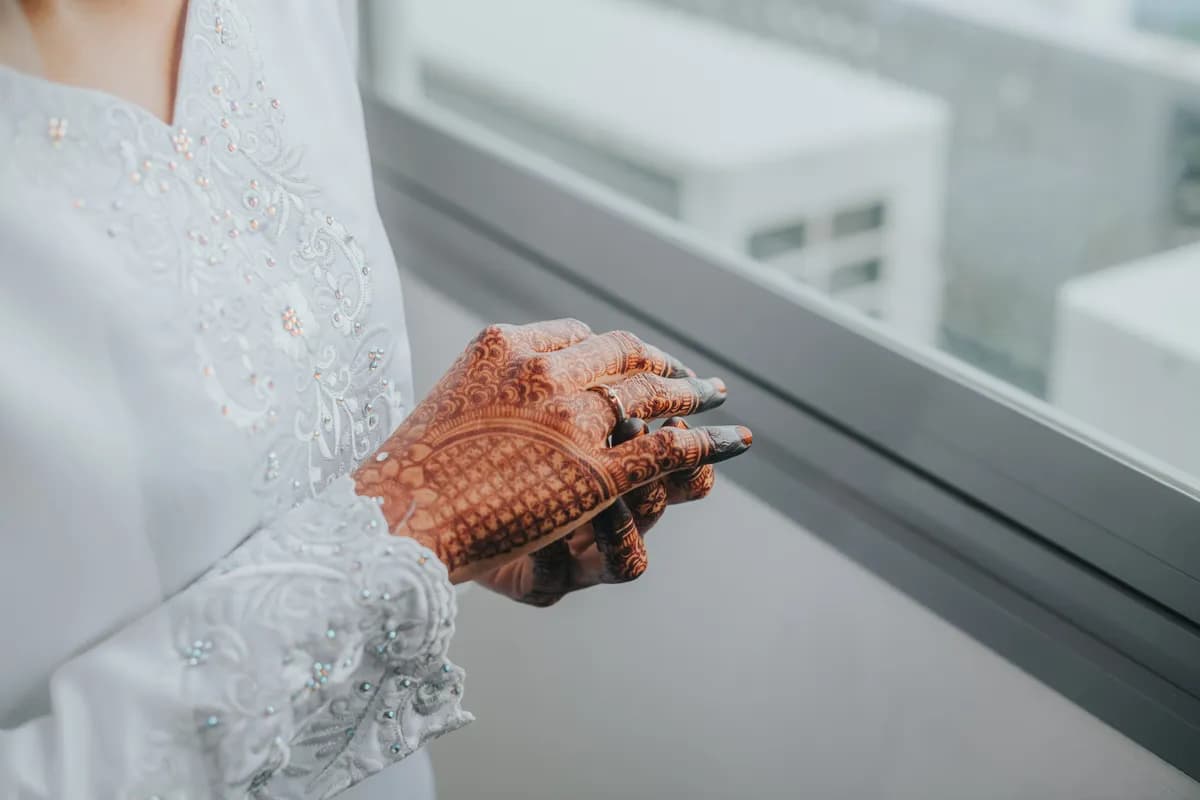
Wondering how your henna will change? Explore hands, palms, or feet, try a skin tone, and follow the colour as it develops.
The reading behind this guide
Curious about the science? These papers explore skin, paste preparation, and dye release. Each note explains what the researchers studied. Dini’s aftercare advice helps you put that context into practice for your appointment.
- Beyond the ink: Marking the skin with henna through ultrasound gel
Jang et al. · Clinical Imaging · 2025
Human skin study: 15 participants, forearm markings through ultrasound gel, seconds-to-minutes contact. Supports a contact-time effect; does not establish a bridal-hours formula or a skin-tone multiplier.
- Retention of colour intensity in henna paste during storage
Verma et al. · Natural Product Radiance · 2008
Paste-storage research. Preparation and storage conditions affected staining performance; its specific preserved formulations are not Dini’s recipe.
- Reinventing henna: Enzyme-catalysed colour release from stabilized Lawsonia inermis L. extracts
Dallmann et al. · International Journal of Cosmetic Science · online 2025; issue 2026
Formulation and yak-hair experiments. Useful for dye release and storage; preparation temperature is not a measurement of how warm hands affect a skin stain.
- In vivo Estimation of Stratum Corneum Thickness from Water Concentration Profiles Obtained with Raman Spectroscopy
Egawa, Hirao & Takahashi · Acta Dermato-Venereologica · 2007
Human skin measurements found thicker outer skin on palms than on the back of the hand and forearm. This was not a henna-colour trial.
- Opto-thermal Measurement of Stratum Corneum Renewal Time
Cowen, Imhof & Xiao · Analytical Sciences · 2001
Human-skin work using henna to follow outer-skin renewal. Supports the link between staining and shedding; its protocol is not an aftercare recommendation.
- Henna through the centuries: a quick HPTLC analysis proposal to check henna identity
Gallo et al. · Revista Brasileira de Farmacognosia · 2014
Botanical quality-control research with a discussion of dye release and protein binding. It does not establish a universal 48-hour skin-colour peak.
Reviewed 28 October 2026. This is a focused literature check, not a systematic review or a clinical prediction model.